The investment insurers make to drive traffic and acquire prospects is easily undermined if the quote journey itself fails to convert. A well-structured Conversion Rate Optimisation (CRO) strategy enables insurers to systematically identify and resolve friction points that cause drop-offs, hesitation — all without requiring full journey redesigns.
This article outlines a practical CRO framework tailored to insurance journeys, supported by a list of prioritised optimisation hypotheses, considering CRO best practices.
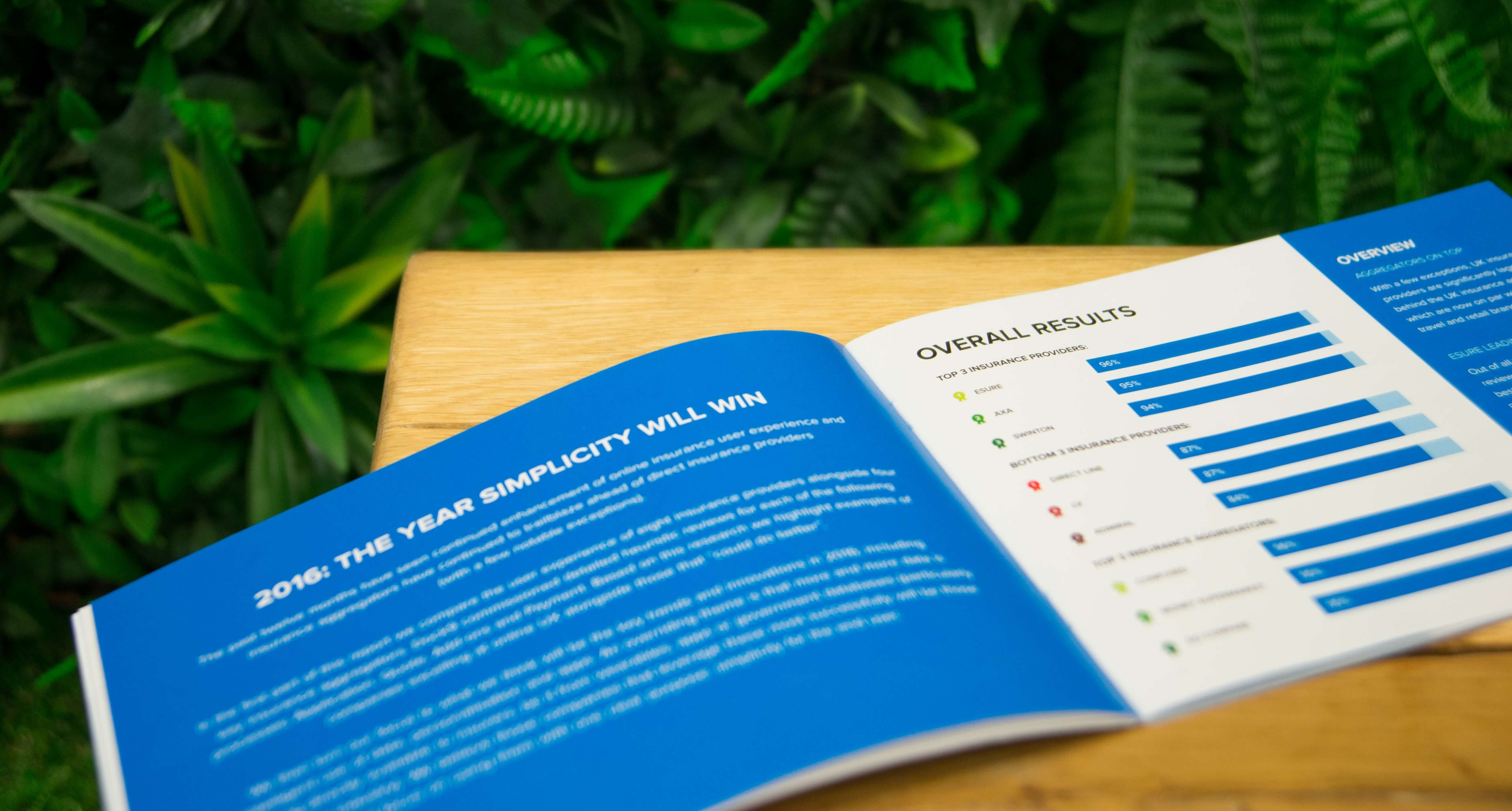
Many of the UX and conversion challenges identified here echo those highlighted in our 2016 report — underlining the persistence of common issues even nearly a decade later, and the continued opportunity for improvement.
1) Funnel Performance Diagnosis
The first step in any CRO strategy is understanding where and why abandonment occurs within the quote and purchase journey. Diagnosis combines quantitative performance data with qualitative behavioural insight.
Key diagnostics to conduct:
- Quantitative data review
- Drop-off rates by funnel step (e.g. % progressing from driver details to cover selection).
- Mobile vs desktop form completion rates.
- Error-triggering fields and frequency.
- Add-on acceptance rates when positioned at different journey stages.
- Qualitative research
- Usability testing to capture hesitation points and navigational issues.
- Session replays to identify rage clicks, hesitations, or loops.
- Heatmaps highlighting field interaction patterns and abandonment hotspots.
- User feedback from surveys and support logs revealing misunderstood terms or process frustrations.
2) Hypothesis Development
Once funnel issues are identified through diagnosis, they should be translated into testable, evidence-informed hypotheses. Based on our sector experience working with insurers for over a decade, we have developed a set of optimisation hypotheses that are likely to improve conversion and engagement.
These hypotheses are grouped under five focus areas, and they can be used as a starting point for structured experimentation and roadmap planning.
Focus Areas 1: Journey Structure & Progress Visibility
Clear, well-structured journeys reduce cognitive effort and the perception of how time must be invested in completing the form, which are both proven to be drivers of funnel abandonment.
Priority hypotheses in this area:
- Add labels to progress indicator
- Start with a low-friction, non-personal input (like, the licence plate information)
Limit questions to underwriting-critical data
Focus Areas 2: Form Design, Layout & Data Entry Support
Optimising form usability, reducing visual clutter, and supporting the user to reduce or prevent errors in their data entry process, measurably improves conversion.
Priority hypotheses in this area:
- Optimise form layouts for readability and logical grouping
- Include contextual icons and interactive aids
- Replace long dropdowns with dynamic search inputs (e.g. occupation list)
- Add real-time, in-line error messaging
- Provide micro copy and tooltips for insurance-specific fields (e.g. explanation on licence type, previous claims)
Focus Area 3: Mobile Journey Optimisation
Mobile is a dominant device for quote generation; forms designed without mobile-first considerations risk high abandonment.
Priority hypotheses in this area:
- Apply mobile-first design adjustments for touch optimisation, like spacing, inputs, and navigation (WCAG AAA recommends 44x44px as a rule, but it’s worthwhile considering, that areas of the screen have different requirements.)
- Simplify or shorten input fields for mobile where possible
Focus Area 4: Conversion Confidence & User Reassurance
Increasing credibility and reducing uncertainty at decision points, directly improves conversion outcomes.
Priority hypotheses in this area:
- Display trust signals at key decision points (Trustpilot, Defaqto, reassurance that the user's data is secure, awards, testimonials, mention of 14-day cooling off period, display of contact details)
- Ensure multi-channel support is visible and accessible
Focus Area 5: Flow Disruption Minimisation & Purchase Timing
Minimising journey interruptions and deferring non-critical decisions reduces cognitive load and helps to maintain user momentum.
Priority hypotheses in this area:
- Allowing customers to add additional drivers via in-line field reveals, without navigating to new screens — maintains continuity and lowers multi-driver abandonment rates.
- Defer add-on presentations until after base quote
- Allow the user to complete a device agnostic, multi-channel journey, not restricting them to complete the whole journey on one device or another (e.g. allowing them to retrieve quote information)
3) Prioritisation
Once you've generated a set of CRO hypotheses, the next step is prioritisation. Not every idea can or should be tested immediately, especially in a sector like insurance where technical complexity, regulatory constraints, and legacy systems can all impact feasibility.
It is important to assess each hypothesis not just on its potential impact and ease of implementation, but also on whether it can realistically be tested using your current A/B testing tools.
You should consider:
- Impact: The potential positive change a test could have on conversion rates or related KPIs (e.g. quote completion rate, form progression, or add-on uptake).
- Effort: The resources required to design, implement, and analyse the test, including development time, UX input, integration work, and QA.
In the context of insurance quote and purchase processes, more complex tests may require development changes or backend integrations that are beyond the capabilities of standard testing platforms. In these cases, changes may need to be implemented through development work and validated via alternative methods such as server-side testing, phased rollouts, or cohort analysis. Prioritising with these limitations in mind ensures your optimisation programme stays both effective and pragmatic.
As an example, adding a labelled progress indicator, can have a high impact on conversion, still it requires low effort to set up an experiment. Overall, the prioritisation should favour the tests that offer strong potential for conversion improvement, while requiring a manageable level of implementation effort.
4) Testing
When it comes to executing your CRO tests in the insurance industry, it's essential to match the testing method to the type of change you're making. For simpler UI and content adjustments—such as tweaking copy, reordering form fields, or experimenting with call-to-action buttons—dynamic CRO tools like A/B or multivariate testing platforms are ideal.
These allow for quick deployment and real-time analysis without needing code changes to your production environment. However, more complex hypotheses—such as altering the quote journey logic, integrating new data sources, or testing alternative pricing strategies—will often require backend development. In these cases, tests may need to be implemented directly in your platform and tracked using custom analytics setups or server-side experimentation frameworks. Success should be measured through clear KPIs like conversion rate uplift, drop-off reduction, or improved quote-to-sale ratios.
By choosing the right testing approach for each scenario, you can ensure that your optimisation efforts are both agile and technically sound.
Pre/Post Implementation Analysis
This method compares key performance metrics (like quote completion rate) before and after a change is rolled out. It’s useful when a full test isn’t feasible, though it is important to consider and set control for external factors such as seasonality or pricing shifts.
A/B and Multivariate Testing
To execute CRO experiments effectively, it is necessary to have a reliable testing infrastructure (one that enables hypothesis validation through controlled experiments -typically via A/B or multivariate testing).
Some CMS vendors (such as Umbraco and Sitefinity) offer inbuilt CRO capabilities directly within the same interface that content managements. Looking outside of inbuilt CRO tools, VWO is a mid-market tool with support for A/B testing, heatmaps, and behaviour analysis. It is important to select a tool that reflects the organisational maturity, volume of traffic, and development model (e.g. CMS-based vs. headless architecture). Regardless of platform, consistency in tracking, statistical validity, and governance of variant roll-out are critical to success.
Session Replay and Behavioural Tools
Using tools like Hotjar, FullStory, or Microsoft Clarity, teams can observe user sessions to identify hesitation points, repetitive actions, or common exit patterns. This qualitative method is valuable for spotting friction not easily surfaced in analytics. It is helpful for early-stage hypotheses, e,g, did the user understand the new tooltip?
Field-Level Form Analytics
This involves tracking how users interact with individual form fields — where they hesitate, make errors, or abandon. It's particularly useful for diagnosing friction in underwriting-critical questions like occupation or claims history and understanding whether a predictive input (instead of a long dropdown) has made any changes in behaviour.
Split URL / Redirect Testing
For testing major structural changes (e.g. a condensed vs multi-step funnel), insurers can direct traffic to entirely different page variants. This method allows full-journey experimentation but requires more backend and routing control.
Cohort and Segment Comparison
By exposing different user segments to different versions (e.g. mobile vs desktop users, or new vs returning visitors), insurers can measure impact across cohorts. This approach works well for testing targeted copy.
User Testing and Direct Feedback
Moderated or unmoderated usability testing helps validate how real users interpret design, copy, or interaction changes. It’s especially valuable for refining trust signals, microcopy, and visual reassurance during key decision points.
Get Started
A structured, hypothesis-led CRO strategy grounded in behavioural data and practical insurer benchmarks offers a scalable, commercially pragmatic way to improve insurance quote funnel performance.
The framework and prioritised hypotheses outlined here provide a practical starting point for insurers seeking to reduce acquisition costs, improve customer satisfaction, and enhance operational reliability.
For a tailored quoting journey audit, performance benchmarking or prioritised CRO roadmap, contact our team and we will be happy to help.